Best Non-Toxic Cookware for Families (PFAS-Free, PTFE-Free Picks)
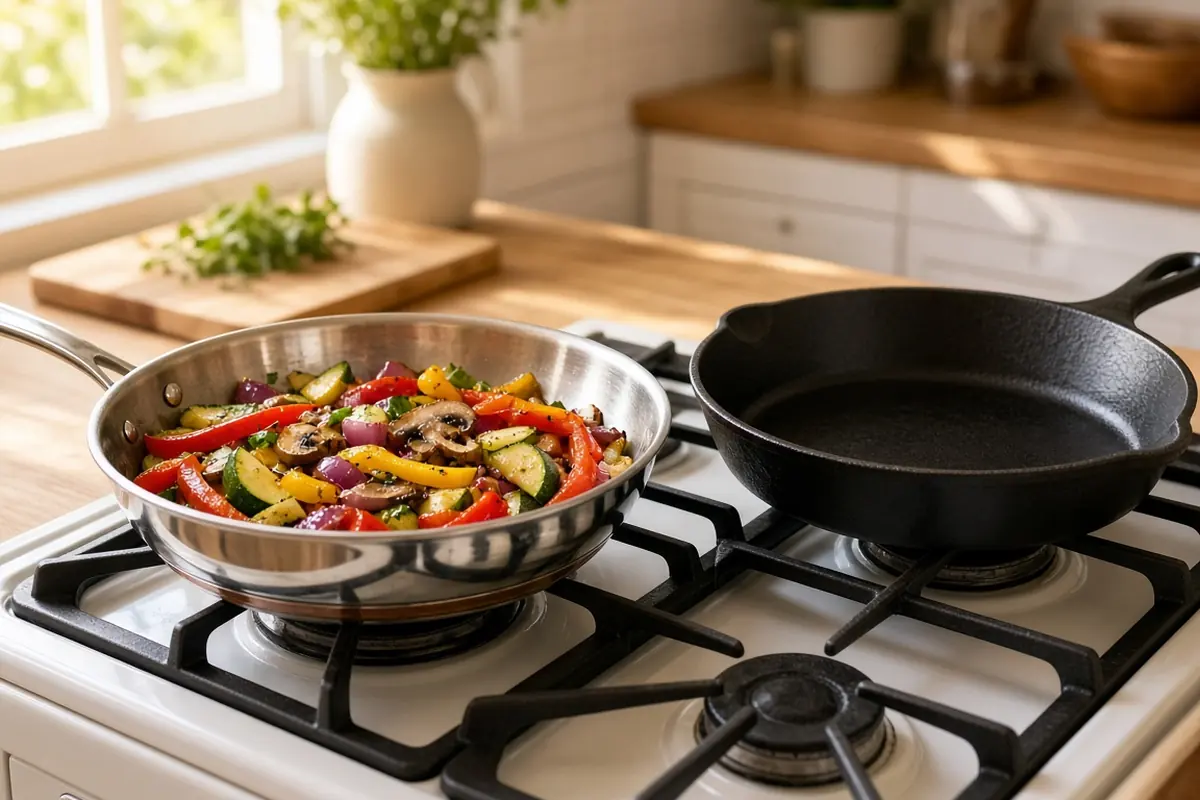
If your nonstick pan is scratched and you're wondering what to replace it with, here's how I think about stainless, cast iron, carbon steel and ceramic, plus the specific pans I'd buy for a busy family kitchen.
Cookware was the first swap I made, and honestly it was the most confusing. Every pan on the shelf seemed to say "non-toxic," "PFOA-free" or "green." Here's what I wish someone had told me at the start, and what I'd buy today.
Why people move away from traditional nonstick
Most classic nonstick pans are coated with PTFE, a type of PFAS (the "forever chemicals" family). The coating itself is considered fairly inert in normal use, but it can break down if a pan is overheated, and coatings scratch and flake as pans age. The bigger concern for many families is the wider footprint of PFAS chemicals in manufacturing and the environment. Regulators are still working through it, and several U.S. states have passed laws restricting PFAS in cookware.
I'm not going to tell you that your old pan is dangerous. What I will say is that there are excellent, long-lasting pans that skip the question entirely, and many of them cost less than replacing a nonstick set every couple of years.
A quick label note: "PFOA-free" isn't the same as PFAS-free. PFOA is one specific chemical that was phased out of U.S. manufacturing years ago, so almost every pan is PFOA-free now, including PTFE nonstick. Look for "PTFE-free" or "PFAS-free," or just choose an uncoated material.
The materials, in plain English
| Material | Good for | Trade-offs |
|---|---|---|
| Stainless steel (tri-ply/clad) | Everything: sauces, searing, boiling pasta, acidic foods | Food can stick until you learn the preheat-then-oil trick |
| Cast iron | Searing, cornbread, pancakes, roasting | Heavy; needs seasoning; long simmering of very acidic sauces can strip seasoning |
| Carbon steel | Eggs, stir-fry, everyday frying | Needs seasoning; looks patchy at first |
| Enameled cast iron | Soups, stews, braises, bread | Heavy; enamel can chip |
| Ceramic nonstick | Eggs and delicate foods with easy cleanup | Coating wears out in a few years; use low-medium heat |
Best stainless steel sets
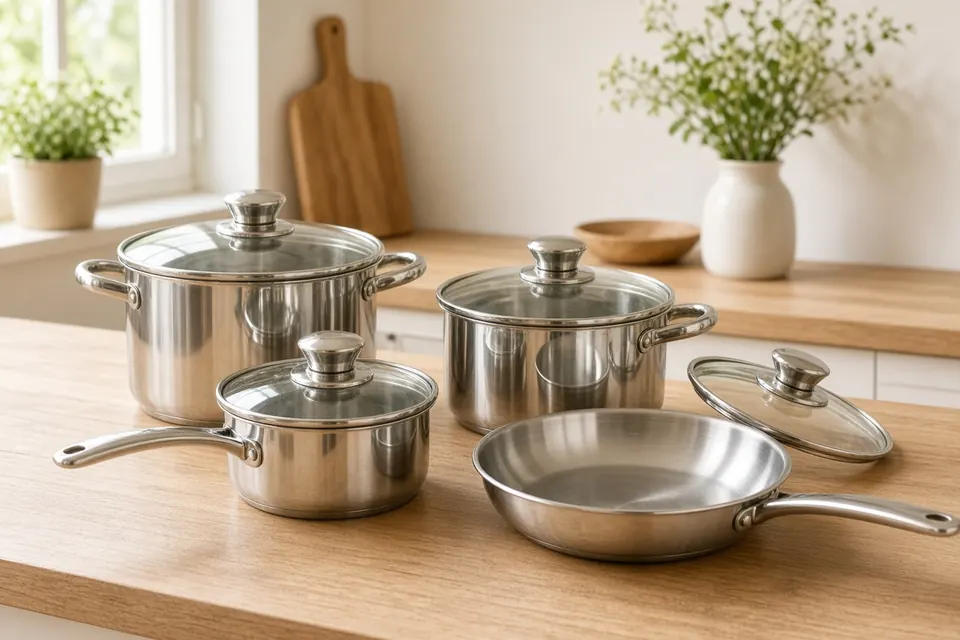
If I could only own one kind of cookware, it would be fully clad stainless steel. "Clad" means layers of steel and aluminum run all the way up the sides, so heat spreads evenly and the pan doesn't scorch in one spot. It's what most restaurant kitchens use, and it goes in the dishwasher.
This guide contains affiliate links; see our disclosure.
All-Clad D3 Stainless Steel Cookware Set, 10-Piece
Three-ply stainless steel with an aluminum core, made in the USA, and a buy-it-once reputation that shows up again and again in long-term owner reviews. There's no coating to wear off, so you never have to wonder about a scratched surface.
Worth knowing: Stainless has a learning curve. Preheat the pan, then add oil, and let food release on its own before flipping.
Check price on Amazon →Tramontina Tri-Ply Clad Stainless Steel 10-Piece Set
Fully clad tri-ply construction (the layers run up the sides, not just a disc on the bottom) at a much friendlier price than the big-name brands. Reviewers consistently compare its cooking to sets costing two or three times as much.
Check price on Amazon →Cuisinart MultiClad Pro Stainless Steel 12-Piece Set
A long-running tri-ply stainless set with lots of pieces, including a steamer insert that's handy for baby and toddler veggies. A good pick if you're replacing a whole cabinet of worn nonstick at once.
Check price on Amazon →How to keep food from sticking to stainless: heat the empty pan over medium for a couple of minutes, add oil and let it shimmer, then add food and don't move it until it releases. For eggs, a little more fat and a little lower heat goes a long way. Barkeeper's-style cleanser takes care of any rainbow tint or stuck bits.
Best cast iron
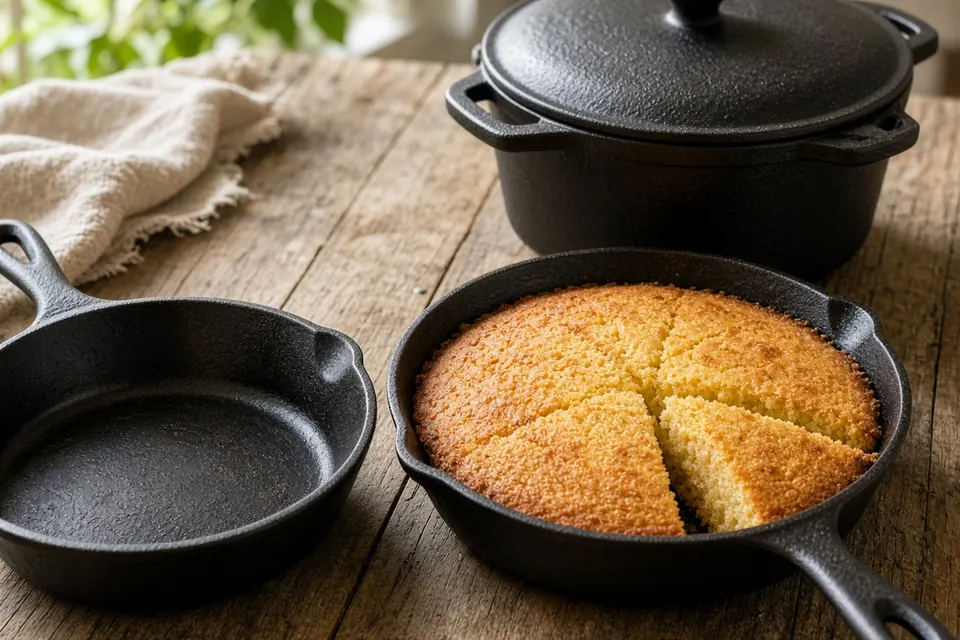
Cast iron is the cheapest way to start. A single skillet replaces your most-used nonstick pan for most jobs. It does add a small amount of dietary iron to food, which most people consider a non-issue or even a bonus, but if anyone in your house has an iron-related condition, check with your doctor.
Lodge Pre-Seasoned Cast Iron Skillet, 10.25 Inch
Plain cast iron seasoned with vegetable oil, made in the USA, and inexpensive enough that almost every family can start here. It gets more nonstick the more you use it and can last for generations.
Worth knowing: It's heavy, and the handle gets hot. Keep it away from little hands on the stove and use a handle cover.
Check price on Amazon →Lodge Pre-Seasoned Cast Iron Skillet, 12 Inch
The 12-inch size fits a family batch of pancakes, a full sheet of quesadillas, or a whole chicken thigh dinner. Same simple material as the smaller Lodge skillet.
Check price on Amazon →Lodge Essential Enamel Cast Iron Dutch Oven, 6 Quart
Enameled cast iron is glass-like enamel fused to iron, so there's no seasoning to maintain and it's fine with tomato sauces and soups. Six quarts covers soups, stews, chili and no-knead bread for a family.
Worth knowing: Avoid metal scrubbers and sudden temperature changes, which can chip enamel. Retire any pot with chipped enamel on the cooking surface.
Check price on Amazon →Best carbon steel
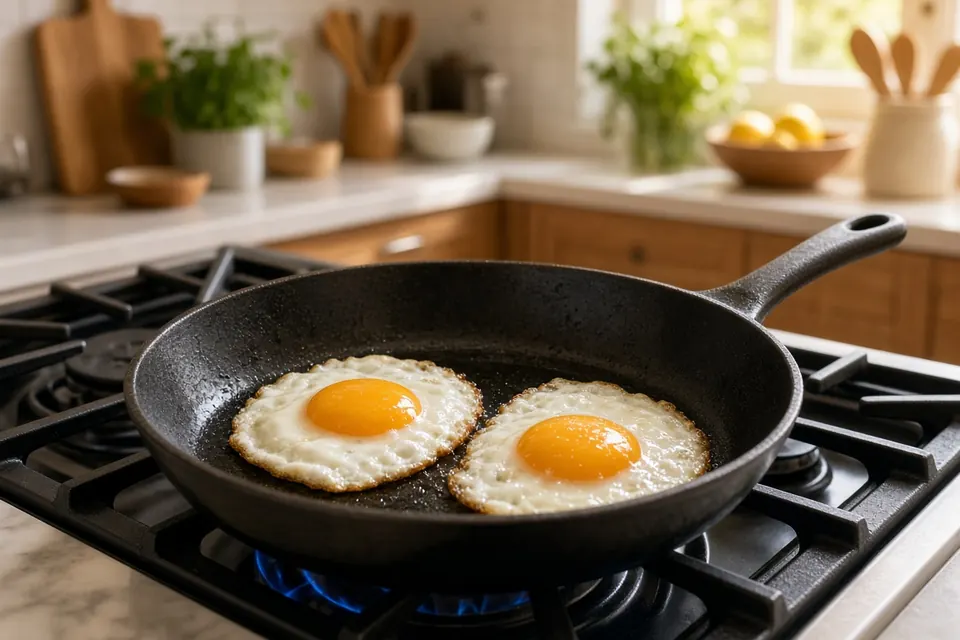
Carbon steel is my favorite egg pan. It's like a lighter, smoother cast iron. Season it a few times and it becomes genuinely slick.
Lodge Pre-Seasoned Carbon Steel Skillet, 12 Inch
Carbon steel behaves like cast iron (seasoning builds a natural nonstick surface) but is thinner and lighter, so it's easier to toss eggs or veggies one-handed while a toddler is on your hip.
Check price on Amazon →de Buyer Mineral B Pro Carbon Steel Fry Pan, 11 Inch
A French carbon steel pan with no chemical coating. The beeswax finish it ships with protects it in transit; once seasoned, it's a fantastic egg and searing pan.
Worth knowing: Expect it to darken and look patchy at first. That's normal seasoning, not damage.
Check price on Amazon →Made In Seasoned Carbon Steel Frying Pan, 10 Inch
Arrives already seasoned, so there's less setup than a raw carbon steel pan. A nice everyday egg pan.
Check price on Amazon →Where ceramic nonstick fits (and its caveats)
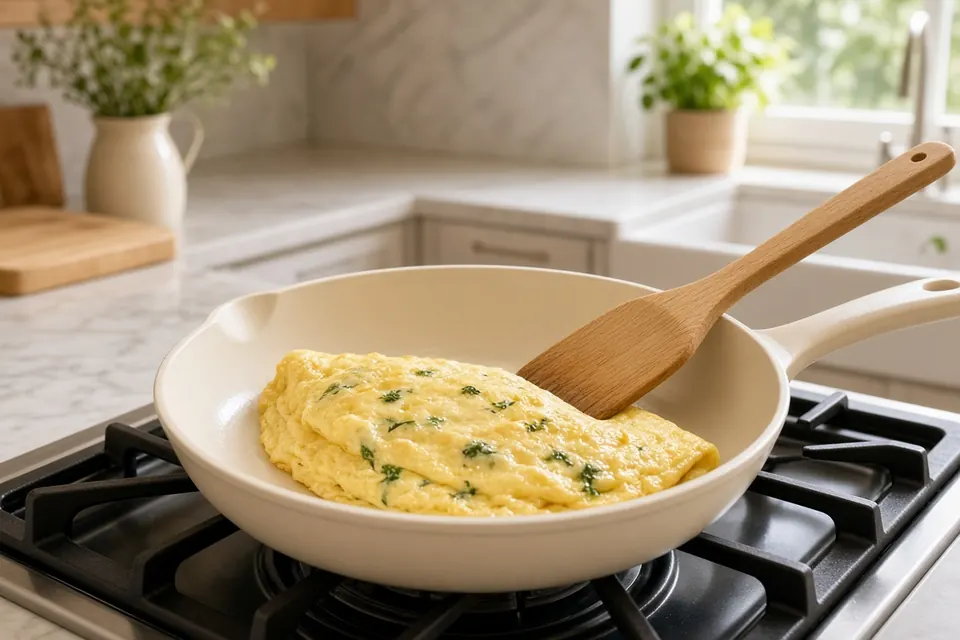
"Ceramic" pans are usually metal pans with a sol-gel coating made from silica. They're made without PTFE and PFAS, which is why they're popular. The honest caveat is durability: ceramic coatings lose their slickness faster than traditional nonstick, especially with high heat, cooking spray, or the dishwasher. Researchers are also still studying what these newer coatings may release as they wear, so I treat them as a convenience pan, not a forever pan.
If you go ceramic, cook on low to medium, use a little oil or butter instead of spray, use wooden or silicone utensils, and hand wash.
Caraway Non-Stick Ceramic Cookware Set, 12-Piece
A sol-gel ceramic coating made without PTFE or PFAS, plus storage racks, which is part of why so many families like it. If you really want an easy-release pan for eggs, ceramic is the coated option I'd look at.
Worth knowing: Ceramic coatings wear out faster than stainless or cast iron, often within a few years. Use low to medium heat, skip cooking spray, and plan on it being semi-disposable.
Check price on Amazon →GreenPan Valencia Pro Ceramic Nonstick 11-Piece Set
GreenPan's hard-anodized ceramic line is oven-safe and induction-compatible. It's a popular middle ground for families moving off traditional PTFE nonstick.
Worth knowing: Same caveat as all ceramic: gentle heat and soft utensils help it last. Hand washing helps too.
Check price on Amazon →What I'd actually buy, by budget
- Tight budget: one 10.25-inch cast iron skillet plus your existing stainless or enameled pot for pasta and soup.
- Middle: the Tramontina tri-ply set plus a carbon steel pan for eggs.
- Splurge: All-Clad D3 plus an enameled Dutch oven, and you're set for decades.
What to do with your old nonstick
You don't need to panic-toss it. Many families phase it out as it wears, or keep one pan for low-heat eggs until a replacement arrives. Once a coating is visibly scratched or flaking, I'd retire it. Some cities accept pans in scrap metal recycling, so check yours.
Kid safety at the stove
Heavier pans are great for cooking and not great for little hands. Turn handles toward the back of the stove, use back burners when you can, and keep a silicone handle cover on cast iron. If you're starting with just one or two swaps, our start-here guide walks through what to prioritize.