Start Here: A Calm, Practical Guide to a Low-Tox Kitchen
If you're feeling overwhelmed by everything you've read about plastics, 'forever chemicals' and the water, take a breath. This is the calm, step-by-step guide I wish I'd had when I started.
I'm Kim, a mom of a soon-to-be kindergartner. I'm not a scientist or a doctor. I started making low-tox swaps one by one as things wore out, reading the research and lots of reviews along the way. This site shares what I've learned, with honest caveats.
My guiding principles
- Progress, not perfection. You can't control everything, and stress isn't healthy either.
- Heat is the big multiplier. Prioritize what touches hot, fatty or acidic food.
- Daily use beats occasional use. The pan you use every morning matters more than the roasting pan you use at Thanksgiving.
- Replace as things wear out, starting with anything scratched, peeling or cloudy.
- Trust certifications over buzzwords. "Non-toxic" isn't a regulated term; NSF certification for a water filter, for example, is.
Step 1: Your everyday pan
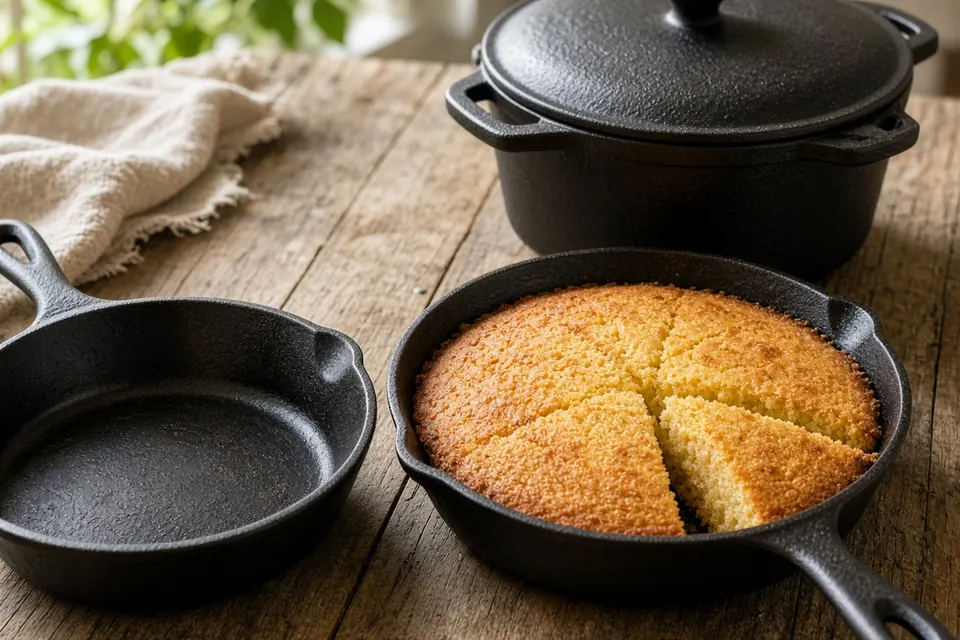
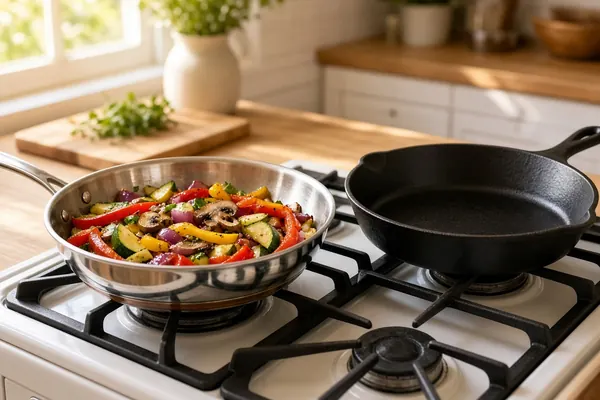
If your nonstick pans are scratched or flaking, they're due for replacement anyway. Stainless steel, cast iron and carbon steel have no coating to worry about. Ceramic nonstick is the easy-release option made without PTFE.
This guide contains affiliate links; see our disclosure.
Lodge Pre-Seasoned Cast Iron Skillet, 10.25 Inch
Plain cast iron seasoned with vegetable oil, made in the USA, and inexpensive enough that almost every family can start here. It gets more nonstick the more you use it and can last for generations.
Worth knowing: It's heavy, and the handle gets hot. Keep it away from little hands on the stove and use a handle cover.
Check price on Amazon →Full comparison: best non-toxic cookware sets.
Step 2: Stop microwaving in plastic
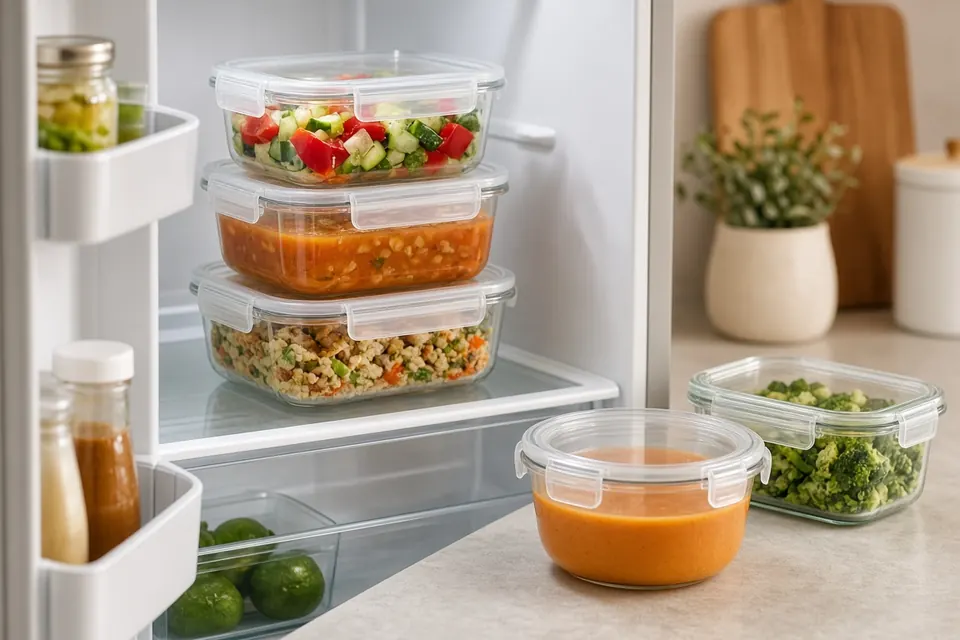
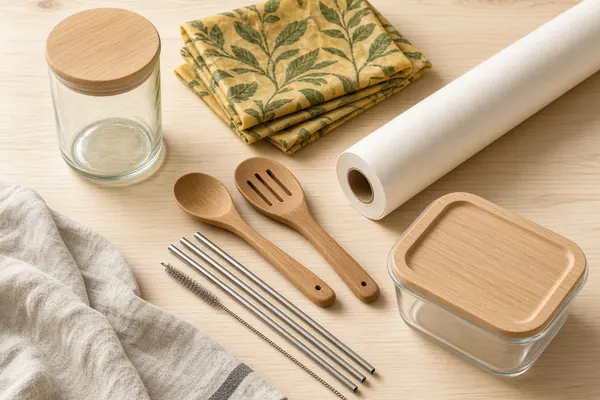
This one costs almost nothing. Reheat in glass or ceramic. Then slowly move leftovers into glass storage.
Pyrex Simply Store Glass Food Storage Set (12-Piece)
Glass containers in sizes that work for leftovers and lunch portions. Glass doesn't stain or hold smells, and you can reheat food in the container (just take the lid off first).
Worth knowing: The lids are plastic. Keep them out of the microwave and off the bottom rack of the dishwasher.
Check price on Amazon →More: glass food storage for kids' lunches.
Step 3: Know your water
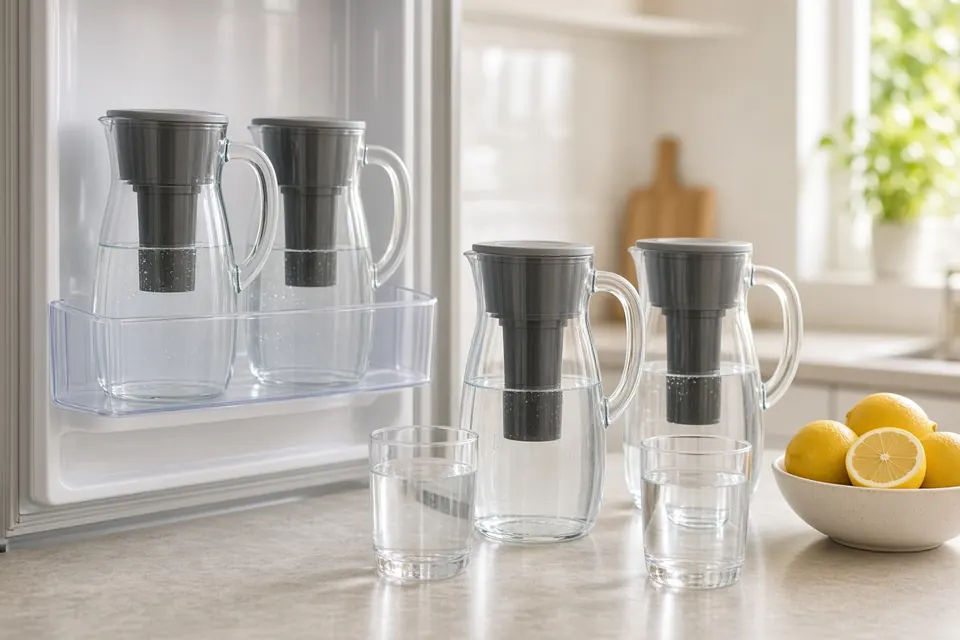
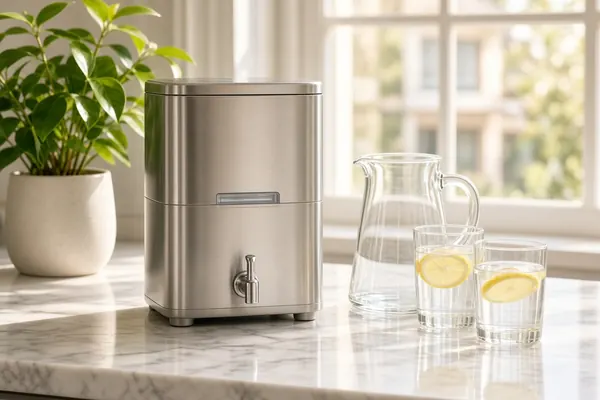
Look up your utility's annual Consumer Confidence Report (water quality report) first, or get your water tested if you're on a well. Then pick a filter certified to reduce what's actually in your water.
Clearly Filtered Water Filter Pitcher, 10 Cup
A popular pitcher among low-tox families because the brand publishes a long list of contaminants it's designed to reduce, including PFAS and lead.
Worth knowing: Before buying any filter, look up the exact model's certifications (NSF/ANSI or WQA) on the certifier's website, not just the brand's own claims.
Check price on Amazon →More: countertop water filters for families.
Step 4: Kids' dishes
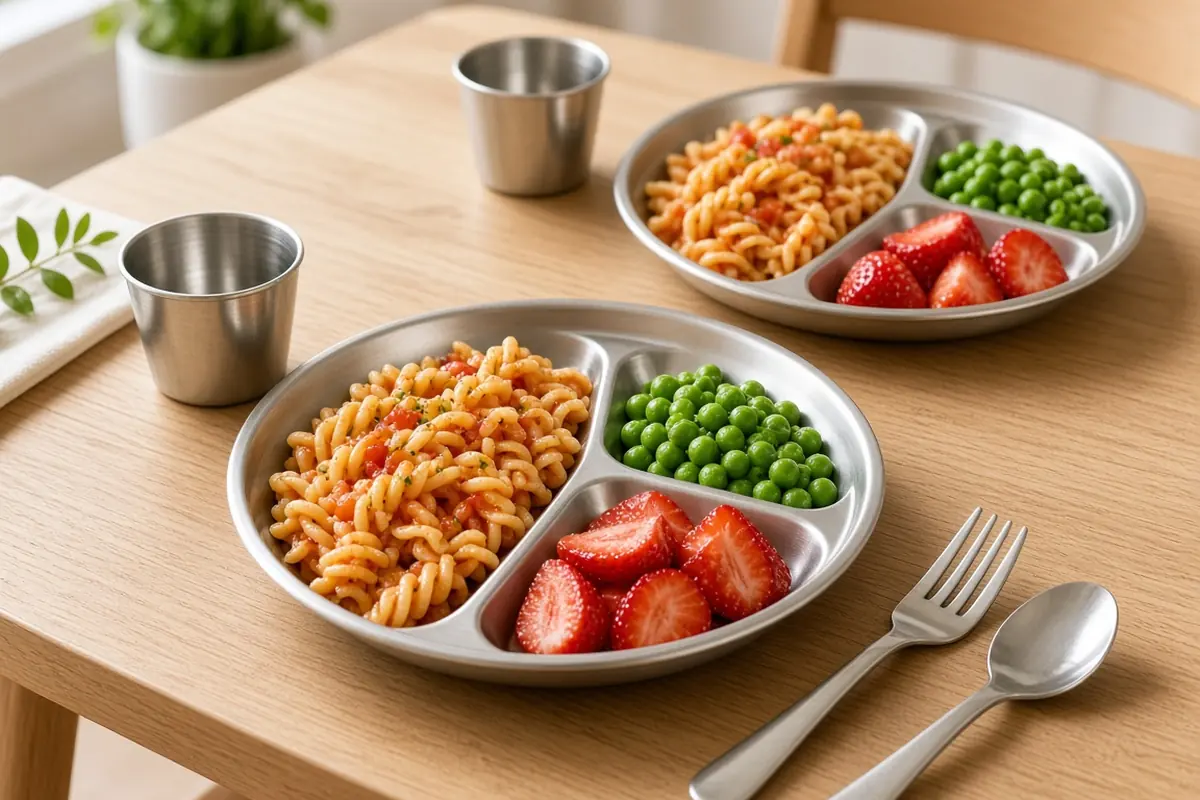
Ahimsa Stainless Steel Kids Dinnerware Set, 5-Piece (Classic)
A plate, bowl, cup and utensils made of food-grade stainless steel and designed specifically for little hands. It won't break when it gets dropped (and it will get dropped), and there's no plastic or coating touching food.
Worth knowing: Stainless isn't microwave-safe, so reheat in glass first and then transfer.
Check price on Amazon →More: plastic-free kids' plates, cups and utensils.
Step 5: Simplify cleaning
Fewer fragranced sprays, more soap, water and good cloths.
More: non-toxic cleaning tools and supplies.
Step 6: Bakeware, air fryer & boards (as they wear out)
Step 7: Air
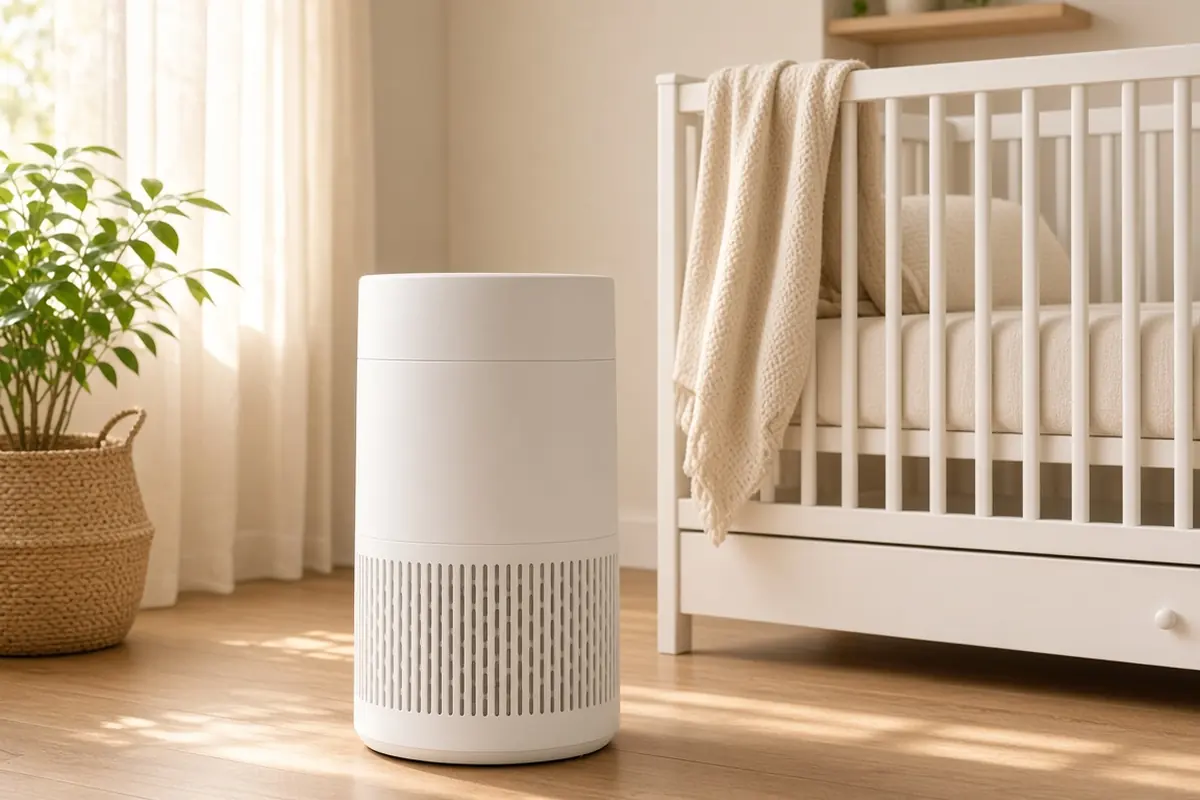
Run the range hood when you cook, open windows when you can, and consider a true HEPA purifier for bedrooms.
Levoit Core 300 True HEPA Air Purifier
A compact, quiet true-HEPA purifier sized for a bedroom or nursery, with a sleep mode and a display you can turn off. It's one of the most-reviewed small purifiers on Amazon.
Worth knowing: Check the replacement filter cost before you buy, and change it on schedule.
Check price on Amazon →More: air purifiers for the nursery and home.
On a budget?
Start with low-tox swaps under $50.
Nothing on this site is medical advice. If you have specific health concerns for your child, including about formula preparation or water, please talk with your pediatrician.