Best Non-Toxic Cutting Boards (and Why I Retired Our Plastic Ones)
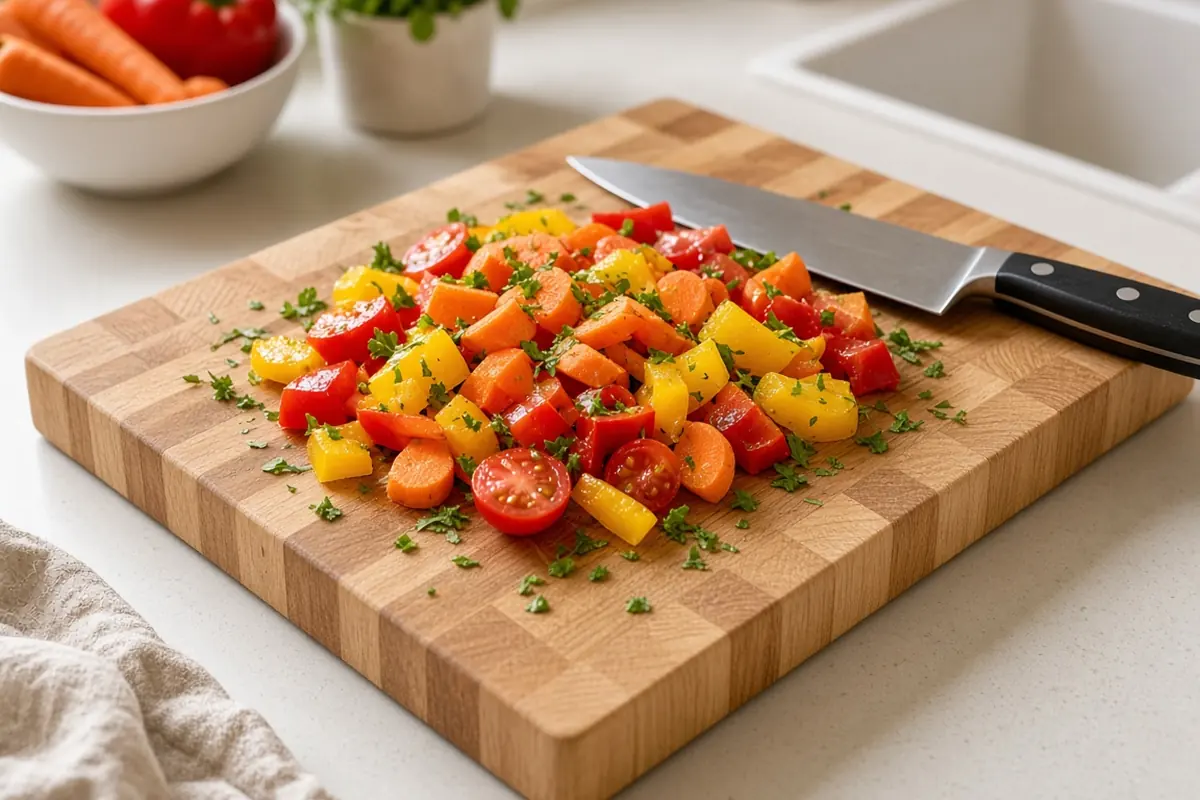
Plastic cutting boards get deep knife grooves that are hard to clean, and research has found they can shed small plastic particles as you chop. Here's what I use instead and how I keep it all clean.
For years we had a stack of thin plastic boards in different colors. Once I noticed how fuzzy and scarred they'd become, it was hard to unsee. A 2023 study in a chemistry journal estimated that chopping on plastic boards can release microplastic particles into food. Scientists are still working out what that means for health, but a good wood board is a simple, pleasant swap regardless.
Isn't wood less sanitary?
This is the number one question I get. Wood is a long-standing, widely used cutting surface, and food safety studies have generally found well-maintained hardwood boards perform comparably to plastic when cleaned properly. What matters most is the routine:
- Wash with hot soapy water right after use, especially after raw meat.
- Dry it standing on its edge so air reaches both sides.
- Never soak it or put it in the dishwasher.
- Oil it when it looks dry, and replace boards with deep cracks.
Many families, including mine, keep one separate board just for raw meat. I use a dishwasher-safe composite board for that job (below).
Best wood cutting boards
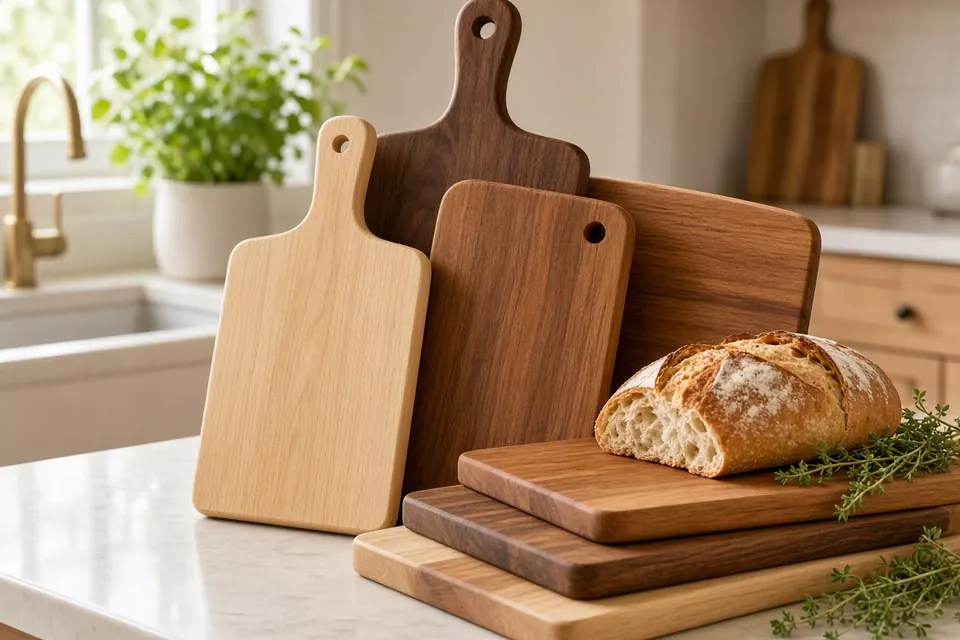
This guide contains affiliate links; see our disclosure.
John Boos R-Board Maple Cutting Board, 18x12
Solid hard maple from a Midwestern butcher block company that's been around for over a century. Maple is gentle on knives, and with a little oil every few weeks it lasts for years.
Worth knowing: Hand wash only and dry it on its edge. Never soak it or put it in the dishwasher.
Check price on Amazon →John Boos CB Series Maple Cutting Board with Juice Groove, 20x15
A thick, reversible maple board with a juice groove for carving roasts and catching watermelon juice. Big enough for full meal prep.
Check price on Amazon →Teakhaus Edge-Grain Teak Cutting Board with Juice Groove, Medium
Teak has natural oils, so it resists moisture and needs a little less oiling than maple. A popular choice for daily veggie chopping.
Check price on Amazon →Larch Wood Canada End Grain Cutting Board, Medium
Handmade end-grain board from Canada. End grain is easiest on knives and tends to show fewer cut marks.
Check price on Amazon →For raw meat: a dishwasher-safe board
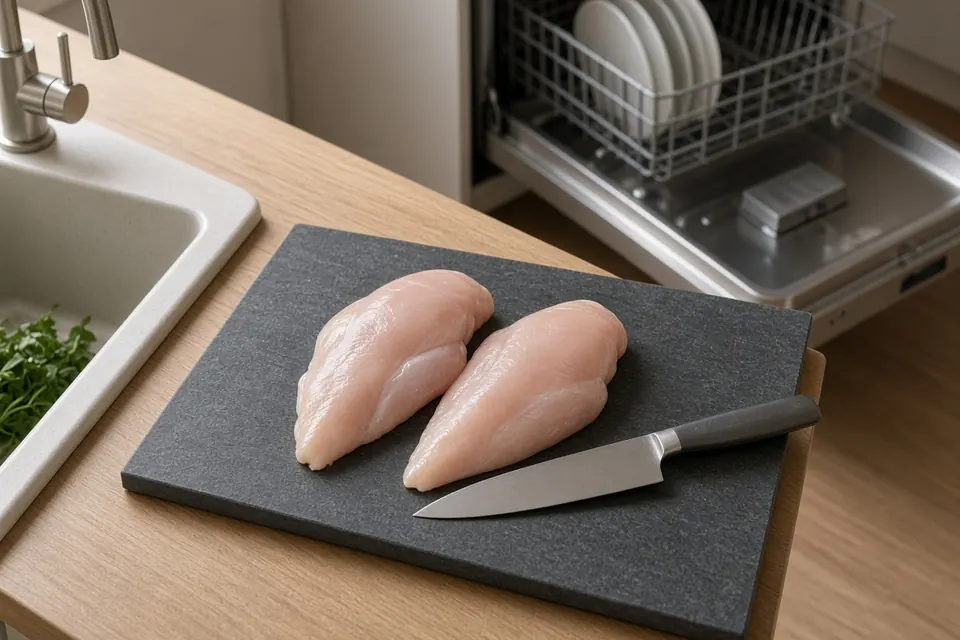
Epicurean Kitchen Series Cutting Board, 14.5 x 11.25
Made from a wood-fiber composite rather than plastic. It's thin, light and dishwasher safe, which makes it my pick for raw meat.
Worth knowing: It's bonded with a resin, so it isn't 'just wood.' I think it's a reasonable trade-off for a board you can sanitize in the dishwasher.
Check price on Amazon →Budget option
Inexpensive bamboo boards in three sizes for fruit, bread and serving.
Worth knowing: Bamboo boards are strips glued together, and bamboo is harder on knives than maple. Fine as a budget option; look for a brand that states food-safe adhesives.
Check price on Amazon →What about stainless steel or titanium boards?
Metal boards are trending as the "most non-toxic" option. They don't shed plastic, but they're very hard on knife edges, slippery, and noisy. I don't recommend them as a main chopping surface. A dull knife is also more likely to slip, which matters when little helpers are around.
Board care
Food-grade mineral oil blend to keep wooden boards and spoons from drying and cracking. Oil once a month, or whenever the wood looks pale.
Check price on Amazon →John Boos Board Cream with Beeswax
A beeswax and mineral oil cream that seals the surface after oiling. Also great on wooden spoons and kids' wooden plates.
Check price on Amazon →Once a month: rub in a thin layer of oil, let it soak in overnight, then wipe off the excess. For smells, rub with coarse salt and half a lemon, then rinse and dry.
Little helpers
If your preschooler likes to "help," a small wooden board on a damp towel (so it doesn't slide) and a kid-safe nylon knife for bananas and cucumbers is a lovely starter job. Always supervise.