Non-Toxic Cleaning Tools & Supplies for a Home With Little Kids
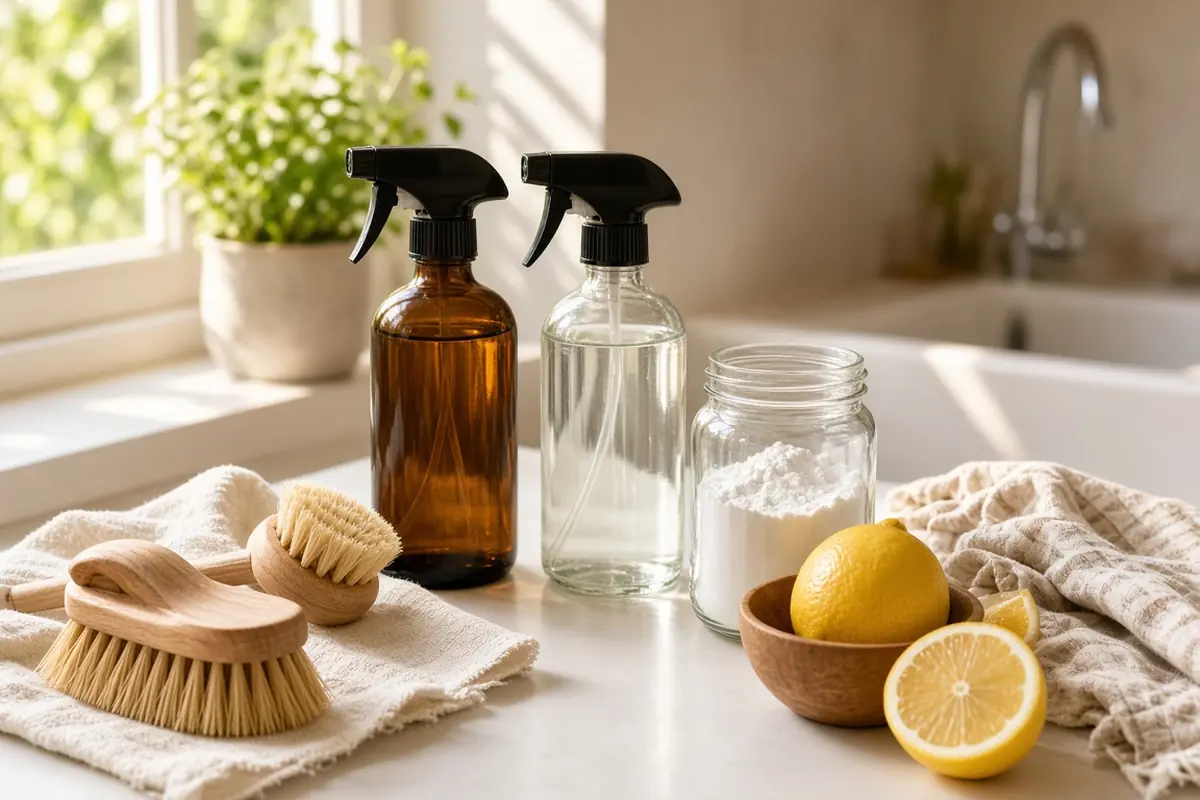
Cleaning with kids around means two things: lots of messes, and curious hands that find every bottle under the sink. Here's the simple, mostly fragrance-free kit I've landed on, and the safety rules that matter more than any label.
My approach to cleaning is "fewer, simpler products." I don't think every conventional cleaner is dangerous, and some jobs (like disinfecting after a stomach bug) call for a real disinfectant. But for daily wiping, I found I could replace a whole cabinet of scented sprays with a few basics.
Safety first, whatever you use
- Never mix bleach with vinegar or ammonia. It creates dangerous gases.
- "Natural" doesn't mean safe to swallow. Store everything, including castile soap and essential oils, up high or locked.
- Label your DIY spray bottles with what's inside and the date.
- Keep the Poison Control number handy: 1-800-222-1222 (U.S.).
- Cleaning vs. disinfecting: soap and water remove most germs from surfaces. When you truly need to disinfect, the EPA keeps a list of registered products. Follow the label's contact time.
Cloths & brushes
This guide contains affiliate links; see our disclosure.
E-Cloth Kitchen Cleaning Cloth Kit
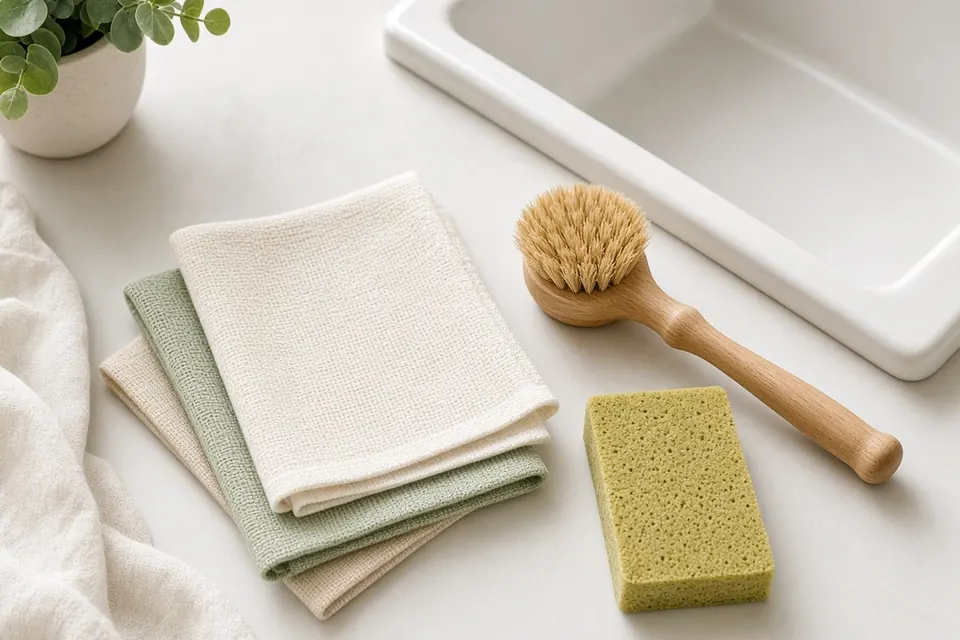
Dense microfiber cloths designed to lift grease and grime with only water for a lot of everyday wiping. Less spray in the air means fewer fragrances around kids' snack spots.
Worth knowing: Microfiber sheds small fibers in the wash. A wash bag that catches fibers is a good add-on if that bothers you.
Check price on Amazon →Wettex Original Swedish Dishcloths, 10 Pack
Cellulose-and-cotton cloths that soak up spills like a sponge, dry quickly, and can be washed and reused for weeks. They replaced most of our paper towels.
Check price on Amazon →Redecker Tampico Fiber Dish Brushes, Set of 2
A German-made wooden dish brush with plant-fiber bristles. It dries faster than a sponge and is gentle on cast iron and enamel.
Check price on Amazon →Full Circle Kitchen Dish Brush with Bamboo Handle
Bamboo handle with a replaceable head, so you swap only the bristles, not the whole brush. Easy to find and inexpensive.
Check price on Amazon →Full Circle Bubbly Palm Brush & Ceramic Soap Dispenser
A small palm brush that sits in a ceramic soap dish. Nice to have right by the sink for quick wash-ups.
Check price on Amazon →Soaps & cleaners
Dr. Bronner's Sal Suds Biodegradable Cleaner, 16 oz, 2-Pack
A concentrated all-purpose cleaner with a short, published ingredient list. A small amount in a spray bottle of water handles counters, floors and more.
Worth knowing: It's a concentrate, so dilute as directed on the label and keep it stored up high.
Check price on Amazon →Dr. Bronner's Baby Unscented Pure-Castile Liquid Soap, 32 oz
A fragrance-free castile soap for hand-washing dishes, counters and mopping. One bottle goes a long way.
Worth knowing: Don't mix castile soap with vinegar. They cancel each other out and leave a greasy film.
Check price on Amazon →Seventh Generation Free & Clear Dish Liquid
A widely available, fragrance-free and dye-free dish soap. A great first swap if you're not ready for DIY anything.
Check price on Amazon →Molly's Suds Dishwasher Powder
A dishwasher powder from a brand focused on simpler ingredients, with no added fragrance.
Check price on Amazon →Bon Ami Powder Cleanser
A mild, chlorine-free scouring powder that's been around since the 1800s. Great for sinks, tubs and baked-on gunk on stainless.
Check price on Amazon →Glass Spray Bottles with Silicone Sleeve, 16 oz, 2 Pack
Glass bottles for your diluted castile, Sal Suds or vinegar sprays. The silicone sleeve adds grip and some protection from drops.
Check price on Amazon →My everyday spray
In a 16 oz glass spray bottle: water plus a small squirt of Sal Suds (check the Dr. Bronner's label for their recommended dilution). I use it on counters, high chair trays and the dining table. For windows and mirrors, a separate bottle of half white vinegar, half water. (Don't use vinegar on natural stone like granite or marble.)
Laundry
Handy Laundry Wool Dryer Balls, 6-Pack
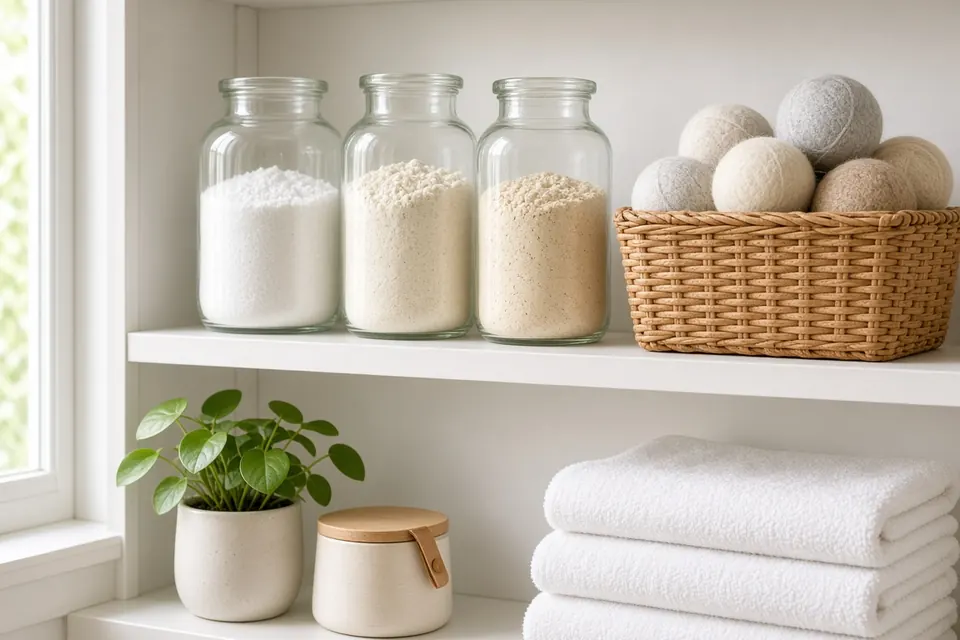
Wool balls bounce around the dryer to soften and reduce drying time, replacing scented dryer sheets. They last for hundreds of loads.
Check price on Amazon →Dryer sheets and heavy fragrance were the easiest things for us to drop. Wool dryer balls handle static and softness well enough for us, and a fragrance-free detergent rounds it out.
About "green" labels
Words like "natural," "eco" and "clean" aren't regulated. If you want third-party help, look for the EPA's Safer Choice label, or check a product's ingredient disclosure on the brand's website. I'd rather see a full ingredient list than a pretty leaf on the bottle.