Non-Toxic Baking Sheets & Bakeware: What I Use Instead of Nonstick
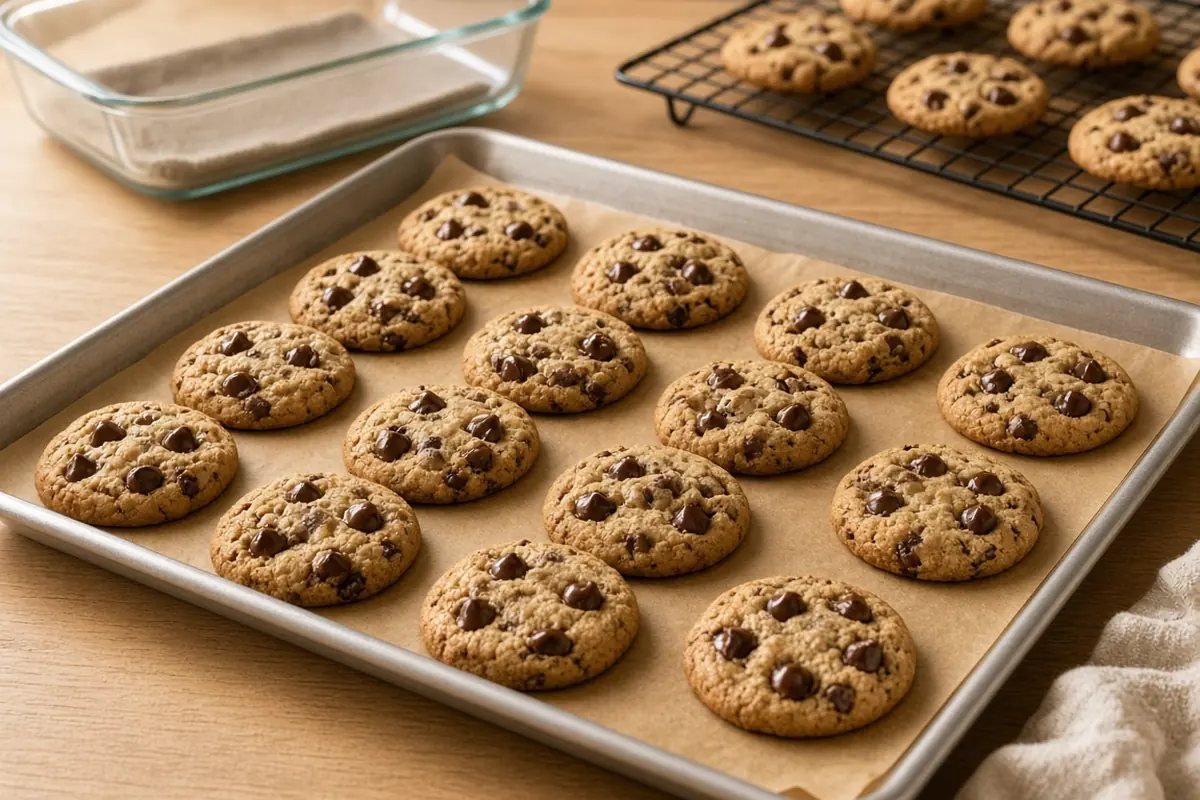
Sheet pans get used almost every night in our house, for roasted veggies, nuggets, cookies and sheet-pan dinners. Here's what I swapped our dark nonstick pans for, and the trade-offs of each material.
Most dark, "easy-release" baking sheets are coated, often with PTFE nonstick or a silicone-based coating. When those coatings scratch, they're also hard to clean and tend to look grimy fast. Uncoated bakeware is cheaper than you'd think and usually lasts longer.
Your options, compared
| Material | Pros | Cons |
|---|---|---|
| Uncoated aluminum | Even browning, light, cheap, used by bakeries | Reactive with acidic foods; discolors in the dishwasher |
| Stainless steel (clad) | Non-reactive, dishwasher safe, very durable | Pricier; single-layer stainless can warp and bake unevenly |
| Glass | Non-reactive, see-through, doubles as storage | Can break; avoid sudden temperature changes |
| Cast iron | Great crust, lasts forever | Heavy; needs seasoning |
About aluminum
People sometimes worry about aluminum. Uncoated aluminum bakeware is widely used and considered safe for ordinary baking. Acidic and salty foods can pull a little more aluminum from the pan, so I line pans with parchment for tomato-based dishes and marinades. If you'd rather avoid aluminum touching food entirely, stainless or glass are the way to go.
Best sheet pans
This guide contains affiliate links; see our disclosure.
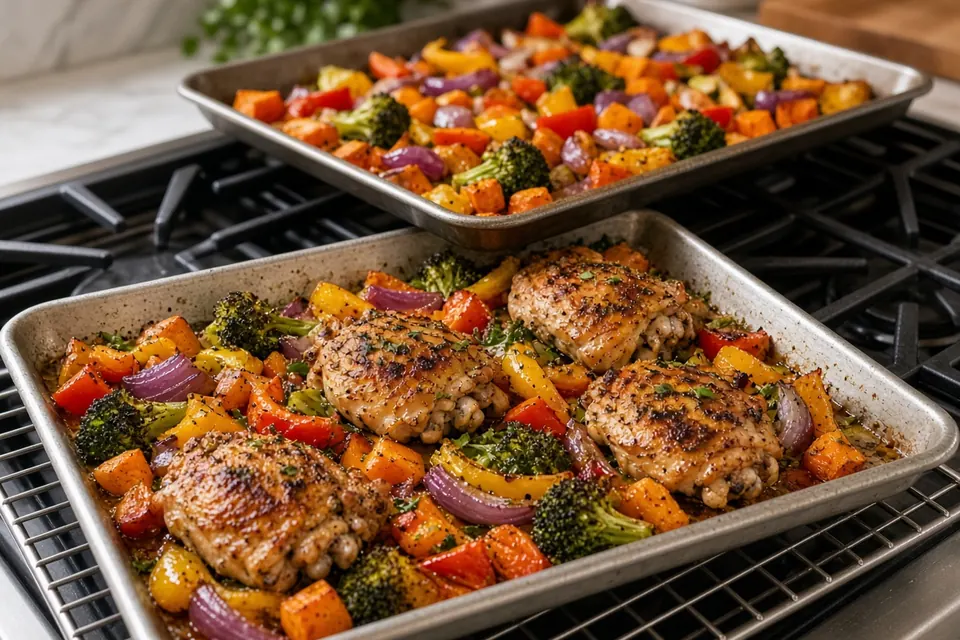
Nordic Ware Naturals Aluminum Half Sheet Pans, 2-Pack
Plain, uncoated aluminum with a steel-reinforced rim so it doesn't warp. Made in the USA, inexpensive, and the pan you'll find in countless home and bakery kitchens.
Worth knowing: Uncoated aluminum reacts with very acidic foods (think tomatoes or vinegar marinades), so line it with parchment for those. Hand wash; the dishwasher dulls it.
Check price on Amazon →Hestan Provisions OvenBond Tri-Ply Stainless Steel Baking Sheet Set (3-Piece)
Tri-ply stainless steel sheet pans, so you get stainless steel on the food side with an aluminum core for even browning. A splurge, but there's no coating and no reactive metal touching food.
Check price on Amazon →Hestan Provisions OvenBond Quarter Sheet Pan with Rack
A smaller stainless pan and rack, the size I reach for most for toddler-portion roasted veggies, chicken nuggets and toaster-oven jobs.
Check price on Amazon →A note on cheap single-layer stainless sheets: they're coating-free, but many reviewers report warping and hot spots. If you go stainless, clad (multi-layer) pans bake much more evenly.
Best baking dishes
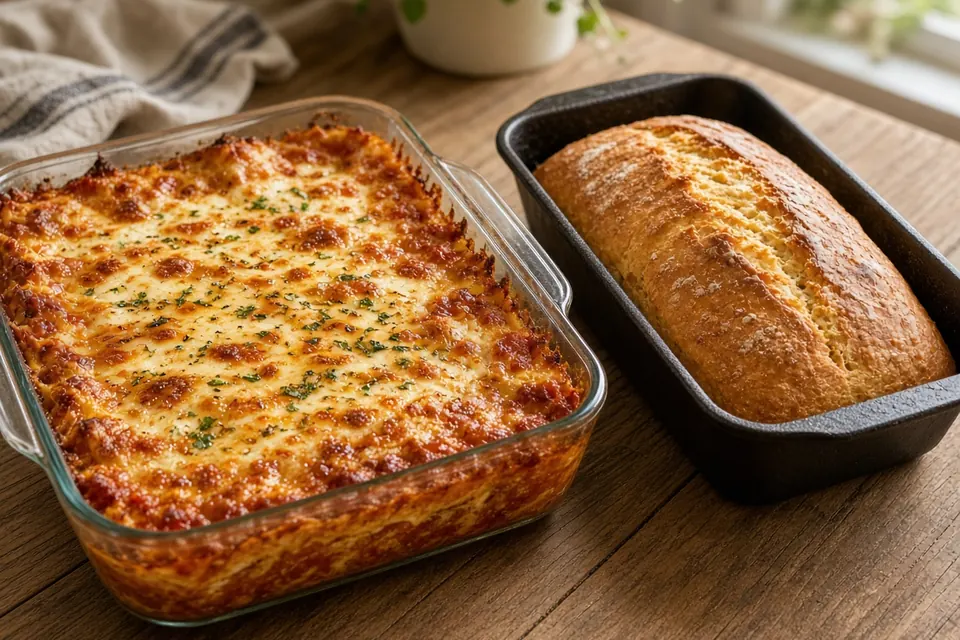
Pyrex Basics 3-Quart Glass Baking Dish (9x13)
Tempered glass is non-reactive and has no coating at all. Use it for casseroles, lasagna, brownies and roasting, then store leftovers right in it.
Worth knowing: Avoid sudden temperature changes (like adding cold liquid to a hot dish or putting it on a wet counter) which can crack glass.
Check price on Amazon →Lodge Pre-Seasoned Cast Iron Casserole Pan, 9x13
A cast iron 9x13 for crispy-edged baked dishes, cornbread and roasted vegetables. Very heavy, very durable.
Check price on Amazon →Lodge Pre-Seasoned Cast Iron Loaf Pan
A loaf pan with no coating for banana bread, meatloaf and sandwich bread. The seasoning builds over time for easier release.
Check price on Amazon →Liners: parchment vs. silicone mats
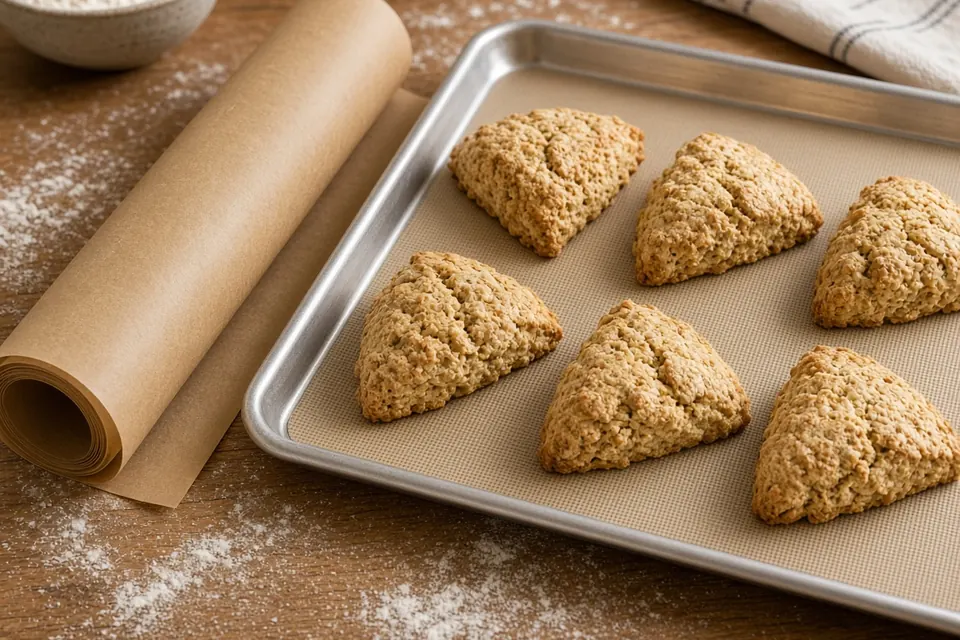
A liner gives you that easy-release, no-scrub cleanup without a coating baked onto the pan itself.
If You Care Unbleached Parchment Paper Roll (2-Pack)
Unbleached, chlorine-free parchment that makes any pan easy to clean and keeps acidic foods off uncoated aluminum.
Worth knowing: Parchment is coated with silicone to make it nonstick. That's typical; I'm comfortable with it at normal baking temperatures (check the box for the max temp).
Check price on Amazon →Silpat Premium Silicone Baking Mat, Half Sheet
The original reusable silicone baking mat. It replaces a lot of parchment over its lifetime and makes cookies release cleanly.
Worth knowing: Food-grade silicone is widely considered stable, though research on silicone at high temperatures is still limited. I use it for baking, not for very high-heat roasting.
Check price on Amazon →Skip foil for acidic foods (it can react and leave little holes in the foil), and don't use wax paper in the oven.
Keeping uncoated pans looking good
- Hand wash aluminum. A paste of baking soda and a little water on a non-scratch sponge takes off most baked-on residue.
- Stainless sheet pans can go in the dishwasher. Use a stainless cleanser for brown spots.
- Darkening and patina on aluminum is cosmetic. It doesn't affect baking.
If you're also replacing your stovetop pans, start with our non-toxic cookware guide.